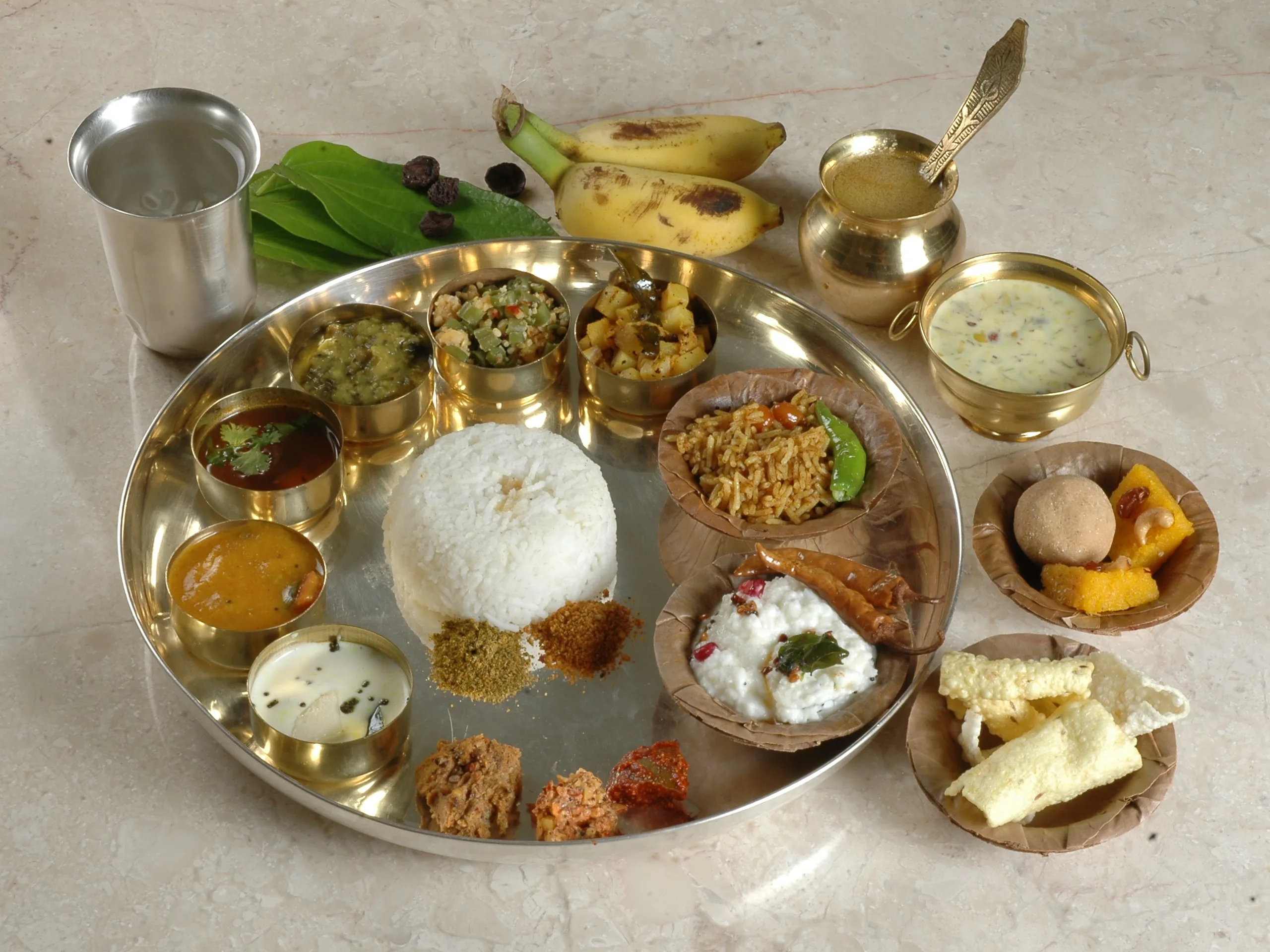
This guide explains what to eat, how the food day is structured and which areas to explore. We do not publish a “best restaurants” list based on unverified ratings, and no venue has paid for inclusion.
The Andhra meal
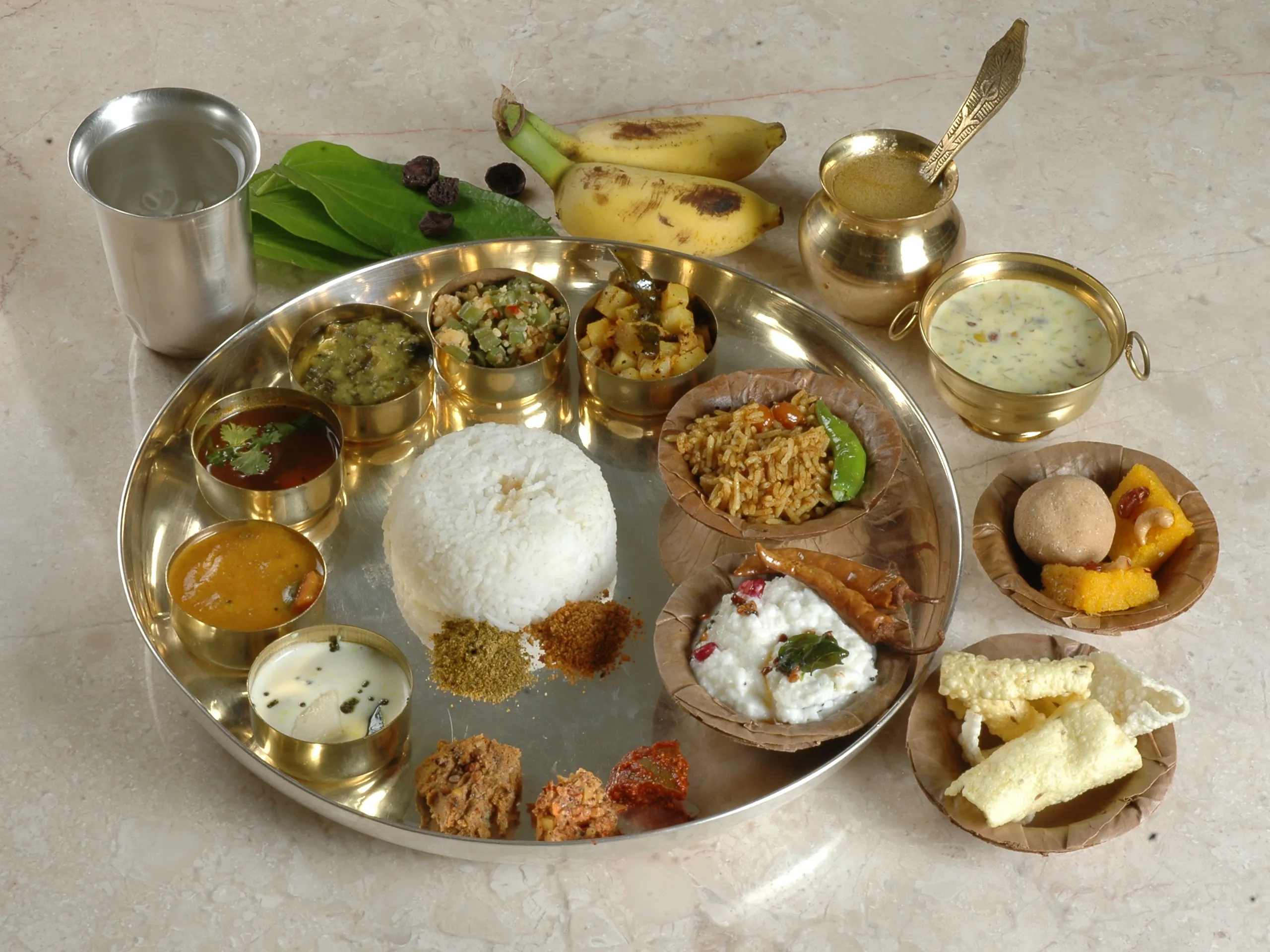
A traditional Andhra meal is built around rice, usually served with pappu (lentil dal), one or more vegetable curries, a pickle such as avakaya or gongura, curd and a crisp accompaniment. In many everyday restaurants, rice and some sides are refilled until you have had enough.
Spice levels are higher than in many other Indian regional cuisines, but “less spicy” is a normal request. If you are not used to chilli, ask before assuming a dish is mild. Vegetarian meals are the default in many traditional establishments; non-vegetarian dishes are often ordered separately.
Breakfast and tiffin
Tiffin is the local word for the savoury breakfast and snack repertoire: idli, dosa, vada, upma, pesarattu and variations. Pesarattu, a green gram dosa often served with ginger chutney, is a particularly good Andhra order.
Breakfast places are usually busiest early. If you want to eat like the city does, go before the office rush and order what is coming off the griddle rather than something that has been sitting.
Biryani and non-vegetarian food
Biryani is popular across Vijayawada, with Andhra-style and Hyderabad-influenced versions. You will also find grilled chicken, fish and other non-vegetarian dishes. Quality varies sharply, so choose a place with high turnover and clear hygiene rather than the loudest sign.
We have not published a “best biryani” ranking because doing it honestly requires repeated, independent visits and a transparent scoring method. Read the verification note for what that process will involve.
Where to look
| Area | Character | Good for |
|---|---|---|
| One Town | Old commercial streets, everyday eateries, market energy | Traditional meals, snacks, local atmosphere |
| MG Road and Benz Circle | Central commercial corridor | Range of cuisines, cafés, hotel restaurants |
| Governorpet and Labbipet | Central business and residential mix | Lunch spots, family restaurants |
| Station and PNBS area | Transit-focused, fast turnover | Quick meals before or after a journey |
| Patamata and Gunadala | Residential eastern belt | Neighbourhood restaurants, quieter evenings |
Area guidance only; individual venues are not ranked or verified on this page.
How to choose a restaurant
- Look at turnover: a busy kitchen is more likely to serve fresh food.
- Check basic hygiene — clean tables, covered food, staff handling and wash areas.
- Read recent reviews for specifics, not just the aggregate score.
- Ask about allergens and whether vegetarian food is cooked separately.
- Prefer filtered or bottled water if you are not used to the local supply.
- Be cautious with raw salads, cut fruit and unpasteurised dairy if you have a sensitive stomach.
Vegetarian, vegan and dietary needs
Vegetarian food is easy to find, and many traditional restaurants are wholly vegetarian. Vegan food is possible but requires more questions: ghee, butter, curd and milk are common. Jain food may be available at some establishments but is not universal.
If you have a serious allergy, carry a written explanation and ask to speak to someone in the kitchen. Cross-contact is difficult to guarantee in a busy restaurant.
Eating on a budget
Everyday tiffin and meal restaurants are generally the best value. Hotel restaurants, cafés and imported ingredients cost more. We do not publish rupee prices because they change; budget from the menus you find and keep a small buffer.
Tipping is discretionary. Check whether a service charge has already been added before leaving an extra amount.
A short menu glossary
- Pappu: lentil dal, usually served with rice.
- Gongura: sorrel leaf, used in a tangy pickle or curry.
- Avakaya: mango pickle, a staple alongside rice.
- Pesarattu: green gram dosa, often served with ginger chutney.
- Pulihora: tamarind rice, a common temple and travel food.
- Curd rice: rice mixed with yoghurt, usually mild and cooling.
Frequently asked questions
What food is Vijayawada known for?
Vijayawada is known for Andhra meals, tiffin such as idli, dosa and pesarattu, and biryani. The city’s food is generally spicy and rice-based, with strong vegetarian traditions.
Is vegetarian food easy to find?
Yes. Many traditional restaurants are vegetarian, and most others offer vegetarian dishes. Confirm whether ghee, curd or dairy is used if you are vegan.
Where can I find the best biryani?
We have not published a ranking. Quality changes and an honest comparison needs repeated visits. Choose a busy, hygienic place and read recent specific reviews; our biryani verification page explains the criteria.
Is the water safe to drink?
Use bottled or filtered water if you are not accustomed to the local supply. Avoid ice from uncertain sources and be cautious with raw salads when travelling.
Sources and further reading
- OpenStreetMap Locations and coordinates, retrieved 25 Nov 2026
- Wikimedia Commons — image credits Photographer, licence and source for every photograph used on this site
- NTR District Administration — tourism Official district information